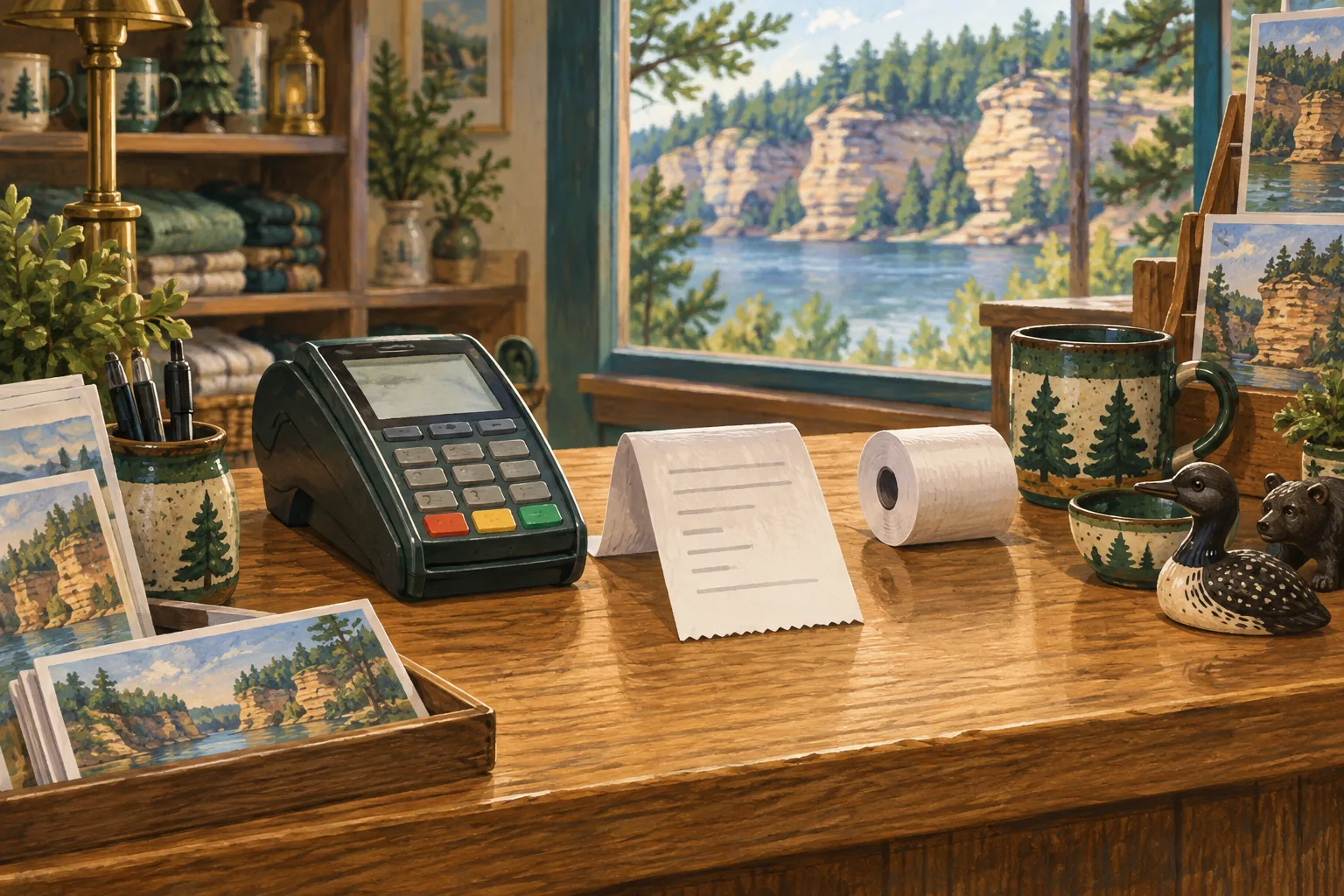
A checkout system can collect ordinary sales tax and still miss a local obligation. For certain sellers making taxable sales in Wisconsin Dells or Lake Delton, premier resort area tax is a separate item to get right. A small setup error can become a real cash expense after the busy season.
This is a practical issue for retailers, restaurants, lodging operators and some recreation businesses. It can also matter to businesses based in Baraboo, Mauston or Reedsburg that make qualifying sales into a resort area. It is worth checking when you open a location, start deliveries, change booking platforms or migrate your point-of-sale system.
Start with the seller and the sale—not the mailing address
Wisconsin DOR lists a 1.25% premier resort area tax for the City of Wisconsin Dells and the Village of Lake Delton. It is not a blanket tax on every business near the Dells. A transaction must be taxable, be sourced to a premier resort area, and be made by a seller within specified industry classifications. DOR’s premier resort area tax guidance lists the rates and eligibility conditions.
The classifications include gift shops, eating and drinking places, hotels and motels, and recreational vehicle parks and campsites, among others. The relevant system is the 1987 Standard Industrial Classification system, or SIC. Do not assume the category selected when setting up your website or payment account establishes the correct classification. Publication 403, Part 4, contains the covered industry codes.
DOR has specifically warned that a covered seller located outside a premier resort area can still have a reporting requirement when selling into one. Being based in Baraboo does not settle the treatment of an order delivered in Wisconsin Dells. Equally, serving tourists does not make every Baraboo transaction subject to this tax. See DOR’s July 2025 reminder to sellers.
Check actual locations and sales channels
Use the Wisconsin tax-rate lookup with the transaction date and precise address. A tourism-area label or familiar ZIP code is not a substitute for checking the location. The lookup also warns that it does not identify every tax that could apply, including municipal room tax.
Make a small list of the ways customers buy from you: at the counter, for delivery, through your own website, through a marketplace, or at events. Ask your tax adviser to confirm the sourcing and tax treatment of each. Keep the answer with your system settings so it survives a staff change or software migration.
Temporary events deserve a separate check. DOR distinguishes a seller’s primary business classification from merely having a temporary booth; it also identifies an exception for establishments primarily selling merchandise from temporary locations under SIC 5963. A blanket “all festival vendors owe resort tax” rule would be wrong. DOR’s event-vendor guidance explains that distinction.
What a missed setting can cost
Consider a fictional gift shop with $80,000 of qualifying, tax-exclusive sales during a reporting period. Assume its sales are subject to the 1.25% Dells-area rate, with no exemptions, returns or marketplace sales in this example.
| Item | Amount |
|---|---|
| Qualifying sales before tax | $80,000 |
| Premier resort area tax rate | 1.25% |
| Calculated resort tax | $1,000 |
That $1,000 is not the shop’s total sales-tax bill; other applicable taxes are outside this example. If the shop missed the collection setting, it could face a $1,000 obligation without having set aside that money. DOR states that the seller remains responsible even when it did not collect the resort tax from the customer. Publication 403, Part 8, explains collection and liability.
Do not apply the example directly to a tax-inclusive price or a mixed sales report. First separate taxable sales, exempt sales, refunds and taxes already included in the price. The useful lesson is to reconcile the tax obligation while cash is coming in, rather than discover it after that cash has paid suppliers.
A marketplace payout is not a tax report
Wisconsin’s marketplace rules can shift collection and remittance to a qualifying marketplace provider, including applicable premier resort area tax. That does not establish what happened on your direct sales. For lodging, DOR also distinguishes marketplace-facilitated municipal room tax from room tax due on the seller’s own bookings. DOR’s marketplace-seller questions explain the division of responsibilities.
Keep the provider’s notice confirming that it collects and remits tax. DOR requires that notice before a seller claims the marketplace-sales subtraction on its Wisconsin sales-and-use-tax return. A provider waiver or incorrect information supplied by the seller can change who is liable. See DOR’s notice and liability rules.
Download the platform’s transaction and tax reports. Match gross customer charges, refunds, provider-remitted taxes, fees and the net bank payout. Keep a separate record of tax you must remit yourself. This helps avoid both missing a liability and reserving twice for a tax the provider already handled.
For hotels and short-term lodging, keep municipal room tax separate from resort tax in your records. Room-tax administration belongs to the municipality; DOR provides a municipal contact and rate directory. Confirm the property’s treatment with the relevant municipality rather than copying another lodging operator’s rate.
A monthly routine that protects cash
- Keep separate balances. Track ordinary sales tax, premier resort area tax and any municipal room tax in distinct liability accounts. A combined balance makes an omitted return harder to spot.
- Test a few transactions. Review a counter sale, an online order and a refund. Compare the receipt and tax report with the approved setup. Repeat after a software change.
- Reconcile before moving money. Match the tax reports to your books, identify provider-remitted amounts, and earmark cash for the remaining liability. Collected tax should not become the reorder budget.
- Maintain a filing calendar. Include the return, responsible person, due date and payment confirmation. DOR requires resort tax to be reported separately from the ordinary sales-tax return, including zero-due periods where a return is required. Review DOR’s filing instructions.
For a seasonal business, ask DOR about seasonal filing rather than simply stopping returns when you close. If a past filing is wrong, discuss correcting it promptly; Publication 403 describes amended returns and seasonal filing requests. See Parts 10 and 12.
The first step is small: choose one recent sales period and trace it from receipt to bank deposit to tax return. Dells Bookkeeping can help organize that reconciliation and work with your tax adviser on the questions it raises.
Rates and requirements checked September 14, 2026. This is general bookkeeping information; classification, sourcing and individual transactions should be confirmed with DOR or your tax adviser.
Sources & references
Official guidance and local research checked September 14, 2026. Follow the links for current rules and their exceptions.
- Wisconsin DOR — Premier Resort Area Tax FAQ (February 2026)
- Wisconsin DOR — Publication 403: Premier Resort Area Tax (March 2026)
- Wisconsin DOR — Wisconsin Tax Bulletin 230 (July 2025)
- Wisconsin DOR — State and Local Sales Tax Rate Lookup
- Wisconsin DOR — Event Vendors
- Wisconsin DOR — Marketplace Seller Common Questions
- Wisconsin DOR — Municipal Room Taxes
Need help with the numbers?
We can help you organize your books and work through the next steps.
Talk with Maggie and Rachel